
Faecal incontinence
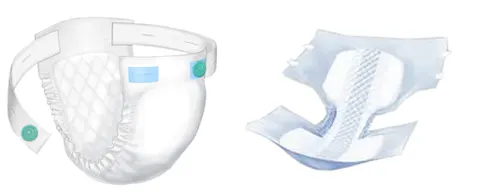
Picture from www.adultdiapersandchux.com/
Faecal incontinence is the involuntary loss of faeces aka ‘soiling your pants’. It is one of the more under-recognised conditions due to the taboo nature of poo. Faecal incontinence reduces quality of life - affected patients do not want to go out as they fear soiling themselves and causing embarrassment etc.
I noticed a regular elderly 84 year old patient of mine was wearing an adult nappy. I enquired further and indeed it was due to faecal incontinence. She was unable to feel the sensation of needing to defecate until it was too late. She agreed for me to trial an acupuncture point to see if I can improve rectal and anal sensation. Acupuncture is thought to work largely through the nervous system. She was having at least daily episodes of faecal incontinence before treatment. I lasered only one point, located on the face (facial acupuncture), and reviewed her 2 weeks afterwards. She had soiled herself only once over the 2 weeks, and had regained her rectal/anal sensation. The one episode of faecal incontinence was due to having diarrhoea which can be normal even for a continent person. We will continue treatment every 1-2 weeks to see how far we can stretch the effects.
There are two main types of faecal incontinence:
- Urge incontinence: desire to defecate by unable to hold in stool due to weakness of anal sphincter weakness, decreased rectal capacity and rectal hypersensitivity
- Passive incontinence: decreased ability to sense the urge to defecate until it is too late. My patient had this type of incontinence.
The causes are many and can include: diabetic neuropathy, pelvic floor injury from traumatic childbirth (this is a big one), nerve injury, medications, dementia etc
Conventional management can include dietary and toileting habit changes, pelvic floor exercises, injectable anal bulking agents, anal sphincteroplasty, and sacral nerve stimulation among others.
Looking at the medical literature, there is no high level evidence that acupuncture helps with faecal incontinence. However, there is a small 2009 pilot study by Scaglia and colleagues from the University of Turin, Italy that showed a 10 week course of acupuncture could decrease incontinence rates as well as improving resting and voluntary anal pressures (important for maintaining continence). It however did not find any change in rectal sensations. Scaglia’s study and my patient’s response suggest that it would be worth performing a larger, more rigorous study on the effects of acupuncture on faecal incontinence.
It would appear that acupuncture is a potential treatment option for passive faecal incontinence as that is due to a sensory nerve dysfunction. I am unsure if it will have an effect for urge type incontinence where there is pelvic and anal spincter weakness - the problem here is not nerves but rather muscle weakness. With that said, if you know any one who may benefit from a trial of treatment, please let them know. It may well be worth a shot.
These are individual cases. Results vary, and many people improve less than described or not at all. Acupuncture is used alongside usual medical care, not instead of it.